DFW Transit Guide: Best Ways to Ride the DART in 2026
· · DFW Pulse
Navigate Dallas-Fort Worth like a pro! Read our ultimate 2026 DFW transit guide to discover the best ways to ride the DART, including new fare changes, rail lines, and local travel tips.
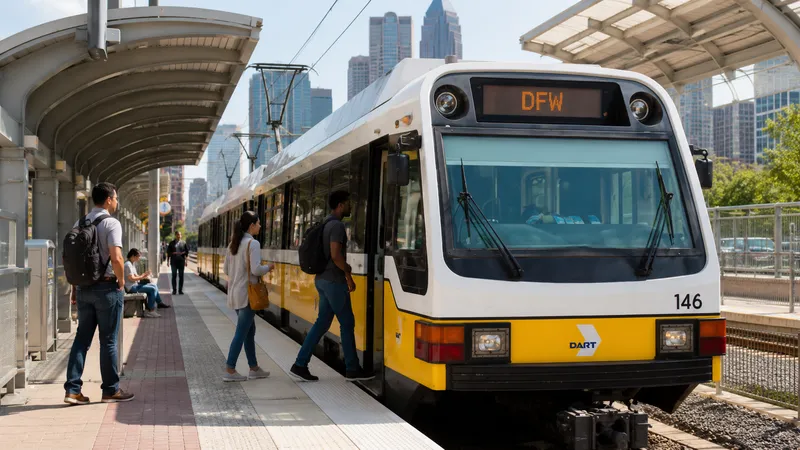
The Dallas-Fort Worth metroplex is famous for its sprawling geography, expansive eight-lane highways, and undeniable car culture. But as the region continues to experience explosive population growth,and hosts massive global events like the 2026 FIFA World Cup,the sheer volume of traffic has made driving a daily challenge. Fortunately, the Metroplex features a robust, far-reaching alternative: the Dallas Area Rapid Transit (DART) system.
Boasting one of the longest light-rail networks in the United States, alongside comprehensive bus routes, commuter trains, and modern on-demand microtransit, DART is the undisputed easiest and most cost-effective way to traverse North Texas. Whether you are a daily commuter trying to reclaim your morning, a weekend adventurer exploring Deep Ellum, or an international visitor navigating between DFW Airport and downtown Dallas, mastering the transit system is your key to a seamless trip.
However, navigating a massive public transit infrastructure requires a bit of local know-how. From understanding the brand-new 2026 fare changes to figuring out exactly which rail line gets you to your destination, this comprehensive DFW transit guide covers the absolute best ways to ride the DART.
Decoding the DART Rail Network: Your Guide to the Trains
The absolute backbone of the DFW transit system is the DART Light Rail network. The system features dozens of stations spread across five distinct, color-coded lines. Understanding where these lines go and how they intersect is step one to becoming a transit pro.
All four legacy lines (Red, Blue, Green, and Orange) converge in Downtown Dallas, creating a transit corridor along Pacific Avenue and Bryan Street. This makes transferring between lines incredibly simple. Here is a breakdown of the routes:
Red Line: The North-South Artery
The Red Line is a commuter favorite, running vertically through the heart of the Metroplex. It stretches from the northern suburbs at Parker Road Station in Plano all the way down to Westmoreland Station in the southern neighborhood of Oak Cliff.
- Key Stops: If you want to go shopping at NorthPark Center, you will take the Red Line to Park Lane Station. It also services the vibrant Mockingbird Station (a hub for dining and retail) and provides direct access to the Dallas Zoo.
Blue Line: Lakes, Arts, and Education
Running from Downtown Rowlett in the northeast to the UNT Dallas campus in the south, the Blue Line is perfect for nature lovers and students.
- Key Stops: Take the Blue Line to White Rock Station if you want to run, bike, or kayak at White Rock Lake. It also drops you off directly at the Cedars Station, giving you walking access to the South Side Ballroom and Alamo Drafthouse, as well as the historic Garland downtown square.
Green Line: Entertainment and Aviation
If you are looking for nightlife, culture, or flights, the Green Line is your best friend. Stretching from North Carrollton to Buckner Station in southeast Dallas, this line hits some of the most crucial entertainment districts in the city.
- Key Stops: The Green Line drops you in the heart of the live music scene at the Deep Ellum Station. It is also the primary rail line for reaching Fair Park (home of the State Fair of Texas, the Music Hall, and the Dos Equis Pavilion) and Victory Station (home to the American Airlines Center). Furthermore, it provides access to the Inwood/Love Field Station, which connects to the Love Link bus to the airport.
Orange Line: The Global Gateway
Operating parallel to the Green Line for much of its route, the Orange Line eventually splits off to serve the northwestern suburbs, acting as the primary rail link between Dallas and DFW International Airport.
- Key Stops: The Orange Line is essential for corporate commuters heading into the Las Colinas Urban Center in Irving. Most importantly, its terminus is DFW Airport Terminal A, dropping travelers just steps away from TSA security checkpoints.
Silver Line: The New East-West Commuter Belt
The newest addition to the DART rail system is the Silver Line, a massive regional rail project designed to connect the northern suburbs without forcing riders to travel through downtown Dallas. Stretching from Shiloh Road in Plano to DFW Airport Terminal B, it traverses Richardson, Addison, Carrollton, and Cypress Waters.
- Key Stops: This line is a game-changer for accessing the restaurant-heavy district of Addison and provides a crucial secondary rail link into DFW Airport for residents living in Collin and northern Dallas counties.
Bridging the Metroplex: The Trinity Railway Express (TRE)
Dallas and Fort Worth are two distinct cities separated by roughly 30 miles of notoriously congested interstate. To travel between them efficiently, you need the Trinity Railway Express (TRE).
Co-owned by DART and Trinity Metro, this heavy commuter rail line runs between EBJ Union Station in Downtown Dallas and the historic Fort Worth T&P Station. The TRE is a relaxing, scenic ride that completely bypasses the chaos of I-30 or Highway 183.
It is also incredibly vital for major sports fans. The TRE stops at CentrePort/DFW Airport Station. From there, complimentary charter buses shuttle fans directly to the stadium in Arlington. Whether you are catching a Dallas Cowboys game or attending a mega-event, the TRE is the only way to get to Arlington using the regional rail network.
The Wheels on the Street: Buses, Streetcars, and Trolleys
While the trains cover the vast distances, the bus and streetcar networks handle the precise neighborhood connections.
The Local Bus Network
DART operates an extensive fleet of local buses that reach the areas untouched by the rail system. Every DART train station acts as a transfer hub for multiple bus routes. In 2026, DART maintains high standards for on-time performance with designated stops clearly marked by blue and white signs. You can track bus locations in real-time using the transit app, ensuring you are never left waiting on the curb.
The Dallas Streetcar
For a modern, scenic ride, the Dallas Streetcar is a 2.45-mile route connecting downtown Dallas to the trendy Bishop Arts District in Oak Cliff. Starting at EBJ Union Station, the streetcar travels over the Houston Street Viaduct, offering incredible views of the downtown skyline before dropping you off in a neighborhood famous for independent boutiques, craft coffee, and legendary pie shops.
McKinney Avenue Transit Authority (M-Line Trolley)
If you find yourself in Uptown, look out for the M-Line Trolley. Operated by the McKinney Avenue Transit Authority, these beautifully restored vintage streetcars are entirely free to ride. They run seven days a week, connecting the West Village shopping district through Uptown and straight into the downtown Dallas Arts District. It is both a practical transit option and a charming tourist experience.
GoLink: DART’s On-Demand Microtransit Secret
One of the most innovative and underutilized services in the DFW transit guide is GoLink. Imagine the convenience of a rideshare app, but at the cost of a standard transit pass.
GoLink offers personalized, on-demand microtransit service within specific designated zones across the Metroplex. If you live, work, or are visiting a GoLink zone, you can use the DART app to summon a vehicle (often a modern, accessible shuttle or a partnered rideshare car) to pick you up. GoLink will either take you to any destination within that specific zone or drop you off at the nearest DART transit facility to continue your journey.
The best part? GoLink is fully included in the cost of your standard DART pass. There are no surge prices and no hidden fees. (Note for 2026 travelers: Following a local election in May 2026, the Town of Highland Park officially withdrew from the DART system, meaning GoLink and local bus routes no longer service the immediate Park Cities zone).
Mastering 2026 Fares and the Essential GoPass App
Fares can often be the most confusing part of learning a new transit system, but DART has recently made significant strides in simplifying their structure. Effective March 1, 2026, DART rolled out new regional fare adjustments that heavily benefit riders.
2026 Fare Reductions: Local vs. Regional
When buying a ticket, you have to choose between Local and Regional fares.
- Local Fares: This covers everything within the immediate DART system: all DART Light Rail lines, local buses, the Dallas Streetcar, and GoLink. A Local Day Pass remains a highly affordable $6.00.
- Regional Fares: If you need to ride the TRE to Fort Worth, or connect to the Denton County Transportation Authority (DCTA) or Trinity Metro, you need a Regional Pass. The biggest news for 2026 is that the Regional Day Pass has been significantly reduced by 25%, dropping from $12 to just $9.00.
If you qualify for reduced fares (seniors, Medicare cardholders, qualifying students, and persons with disabilities), a Regional Day Pass is only $4.50, and a Local Day Pass is $3.00.
Why You Need the GoPass App
While you can purchase paper tickets at kiosks located at every rail station, the absolute best way to ride is by downloading the official GoPass app.
Available for iOS and Android, GoPass allows you to purchase and store digital tickets directly on your smartphone. More importantly, it features "Fare Capping." If you buy individual AM/PM passes throughout the day, the app will automatically stop charging you once you hit the $6.00 Local Day Pass limit. You will never overpay for transit again. Furthermore, the GoPass app features a robust trip planner that integrates train schedules, bus tracking, and GoLink booking into a single, intuitive interface.
Essential Pro-Tips for Riding DART Like a Local
To truly master the DFW transit guide, keep these practical tips in your back pocket.
Mastering DFW Airport and Love Field
When flying out of DFW International Airport, you have two rail options: the Orange Line to Terminal A, or the Silver Line to Terminal B. If your flight departs from Terminals C, D, or E, simply take the train to A or B, pass through the DART turnstiles, and take the free Skylink train inside the airport to your final gate. It completely eliminates the stress of airport parking.
For Dallas Love Field, take the Green or Orange line to the Inwood/Love Field Station. From there, hop on the Love Link (Route 5). This dedicated shuttle bus waits directly at the rail station and drives you straight to the ticketing counters at Love Field.
Park and Ride Locations
You don't have to live right next to a rail line to use it. DART operates massive, free Park & Ride lots at major suburban stations (like Parker Road in Plano, or North Carrollton/Frankford). During rush hour, the smartest commute strategy is driving to a Park & Ride, leaving your car for the day, and reading a book on the train while everyone else is stuck in traffic on the North Dallas Tollway.
Safety and Security First
DART takes passenger safety seriously. The system is patrolled by dedicated DART Police and Transit Security Officers. If you ever feel unsafe, or witness an issue on a train or bus, you can use the DART Say Something app. This allows you to discreetly text photos and location information directly to DART Police dispatch for immediate assistance. Stations are well-lit, equipped with CCTV, and feature emergency call buttons.
Mega Events and Transit: The Summer 2026 Impact
Public transit becomes arguably the most critical infrastructure during mega-events, and the summer of 2026 is a prime example. With the FIFA World Cup drawing millions of global visitors to Dallas, DART is the designated lifeline for the festivities.
To handle the surge, DART implemented temporary, massive service enhancements from June 8 through July 19, 2026. For those attending the FIFA Fan Festival at Fair Park, the system is running at peak capacity, featuring 10-minute service intervals between Victory and Lawnview stations from 8 a.m. to 8 p.m. Additionally, the TRE is operating on a 30-minute frequency on match days to ensure a smooth flow of fans heading toward the Arlington stadium via the CentrePort shuttle connection.
If you are planning to attend any massive events,be it an international soccer match, a State Fair Saturday, or a major concert,parking near the venues is universally difficult and expensive. Riding the Green Line or the TRE is not just a suggestion; it is the official recommendation of city planners. (Check out Ultimate Guide to the 2026 FIFA Fan Festival Dallas Concert Lineup)
Conclusion
The Dallas-Fort Worth Metroplex is a massive, dynamic region, and you do not need to spend your life behind the wheel to experience all it has to offer. By taking advantage of the expansive DART rail network, hopping on the TRE to Fort Worth, or utilizing the GoLink on-demand services, you can save money, reduce your carbon footprint, and reclaim your time.
Download the GoPass app, take advantage of the newly lowered 2026 regional fares, and start exploring the city like a true local.
Where are you heading on your next DART ride? Be sure to subscribe to the DFW Pulse newsletter for more local guides, and if you find yourself waiting for a train near Exposition Park, check out our guide to the Top Bars and Restaurants Near Fair Park for a pre-ride meal.